
Outstanding Warrants in Floyd County
Outstanding warrants in Floyd County are court orders that still sit unexecuted, unreleased by recall or quash, or otherwise unresolved. Those labels track status only. A public docket can show a warrant issued and still lag behind service or a later court action, so the current Floyd County court file is what controls. Start at MyCase and read the whole docket, not just one line. Then call the Clerk at 812-948-5411 with the case number, court code, full name, and date of birth. For a current booking or bond question, AIS answers at 812-948-5406. The county, the Sheriff, the Indiana courts, and the State Police all publish a public live list of active warrants? No, none of them does.
Quick answer: A blank online result does not prove that Floyd County has no active warrant. Confirm status with the issuing court.
Floyd Active Status Needs Confirmation
A Floyd County warrant does not sit still after issuance. Law enforcement may execute it. A judge may recall or quash it, which strips the order of its force. The warrant can go back to the court and later be reissued, and a bond entry can record a release condition while the case itself continues. Each of those steps means something different for status.
- Active or outstanding
- An order believed to remain enforceable, subject to current court confirmation.
- Executed
- Law enforcement carried out the arrest command.
- Recalled or quashed
- The court withdrew the warrant.
- Returned or reissued
- The order moved back to court administration and may issue again.
Never call a Floyd County warrant active off one stale docket line. Ask the Clerk to review the current official record and name the issuing court.
The Floyd County Active Warrant List
Floyd County publishes no official public active-warrant list. MyCase is the best public starting point, yet Indiana's court-record guidance is blunt: it is not the official record and may be incomplete or wrong. The service offers statewide case information, not a live execution log, and the Sheriff's public pages likewise promise no searchable warrant-by-name roster. A sound warrant check therefore runs in steps. Search MyCase with the right Floyd court filter and read the docket. Then contact the Clerk and ask the issuing court what the current order requires. Save Sheriff and jail numbers for custody, service, and bond questions. For a Sheriff-held non-exempt record or an aggregate policy question, call Records Requests at 812-542-1790.
Floyd Clerk, Sheriff, Jail Roles
Three offices answer three different warrant questions in Floyd County. The Clerk keeps the official court file and records every order the court enters. The Sheriff serves process and holds the agency's own records. The jail confirms current custody through AIS and handles bond logistics. Asking the right office keeps a public case summary from being mistaken for a live service record.
| Office | Question | Official route |
|---|---|---|
| Clerk | What does the current court file show? | 812-948-5411 |
| Issuing court | What filing, hearing, or appearance is required? | Use the case’s court code |
| Sheriff records | Is a non-exempt agency record maintained? | 812-542-1790 |
| Jail/AIS | Is the person currently booked, and what bond logistics apply? | 812-948-5406 |
Call 911 only for an emergency. It is not a records line.
Active Warrants: What They Show
Indiana law fills a warrant with core fields: the person named or reasonably identified, the offense, the issuance date and county, a required signature, the arrest command, bail, and direction to law enforcement. A public Floyd County docket may add a case number, court, charge, warrant event, return, bond, hearing, recall, or disposition. Some material behind it can stay sealed or redacted.
| Floyd case number | A court-coded identifier, such as 22D01-YY-F?-#####. |
|---|---|
| Issuing court | Circuit or Superior Court 1, 2, or 3. |
| Warrant event | Issue, service, return, reissue, recall, or quash. |
| Bond | A court-set release condition, not case dismissal. |
| Next setting | A hearing or other court obligation. |
A Floyd County record can change after you last viewed it, so keep the case number and verify again.
Floyd Superior Courts Hold Orders
Floyd County Superior Court 2 handles criminal, probation, Alcohol and Drug Services, and traffic-related matters, according to its official page.
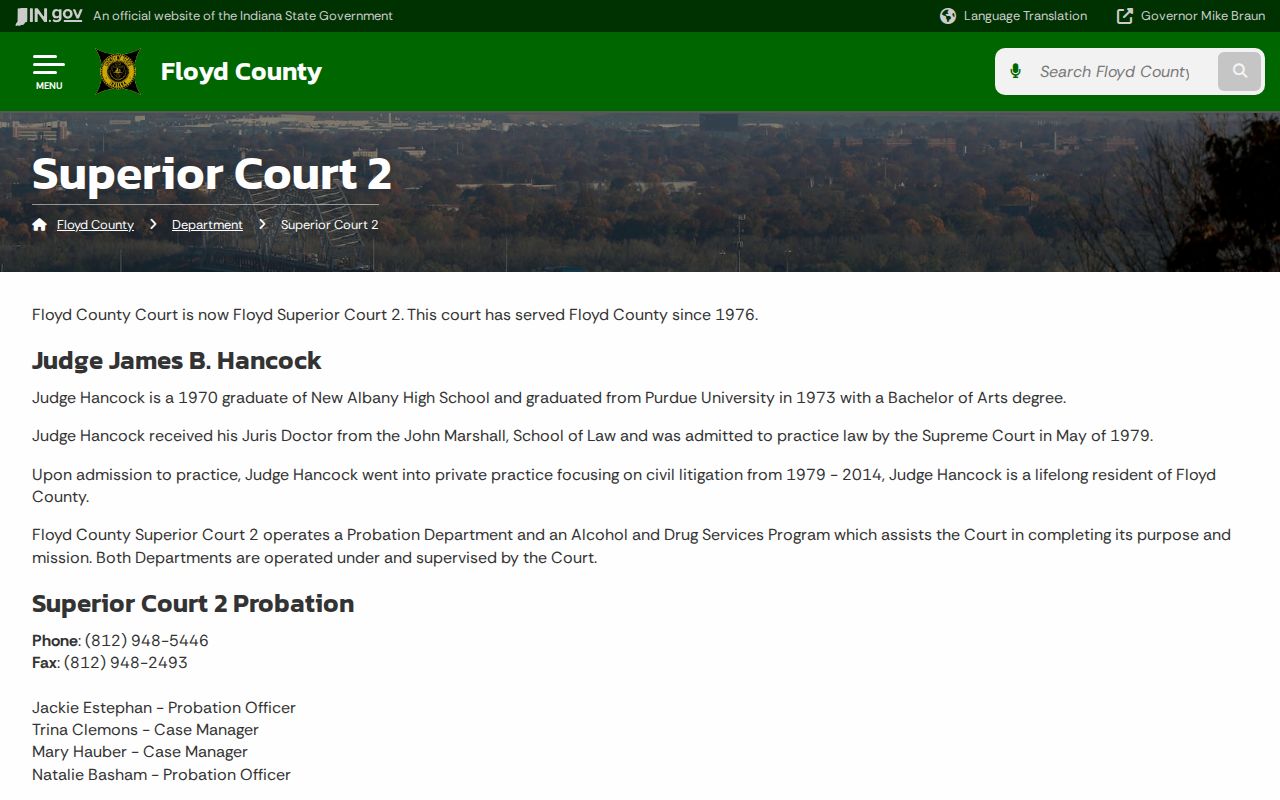
That context matters for anyone tracing a Floyd County warrant. A probation or traffic obligation can demand a different route than a new criminal charge. Paying an unrelated balance, or calling the Sheriff, will not recall a court order. Superior Court 3 is also a general trial court, and its official page posts its court and Veterans Court schedule.
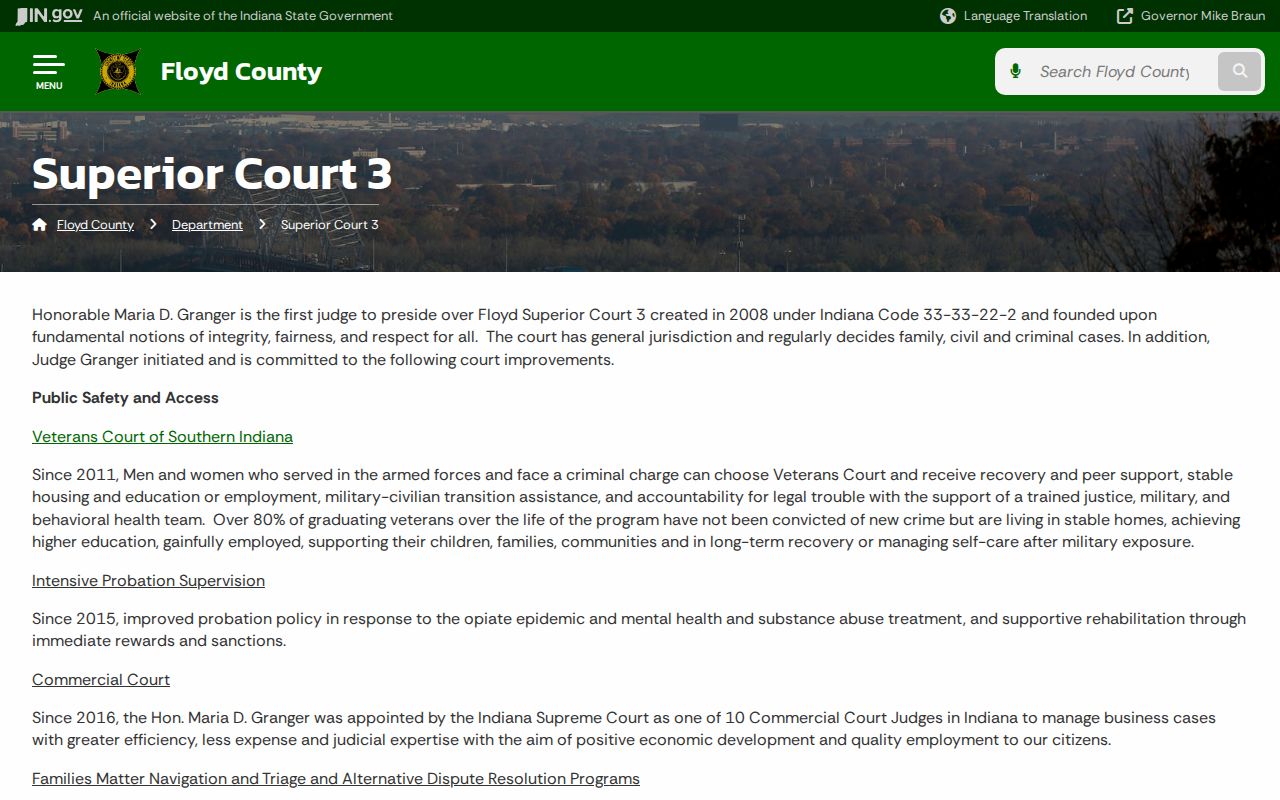
Which court holds a Floyd County case comes from the case record itself. Guessing by charge type is not reliable.
Floyd Warrant Return Is Not Clearance
Floyd Local Rule LR22-CR00-211 governs warrant return and reissue in Floyd County. Misdemeanor warrants return to the issuing court at six months and may be reissued at the prosecutor's request. Felony warrants return after one year. Bench warrants also return after one year and are reissued as needed. These are administrative steps, not endings. Time alone never clears the underlying case, and a returned warrant can come back as a reissued one. A civil body attachment may carry a one-year expiration, yet that still does not erase the contempt or support issue beneath it. Ask the issuing court directly whether the active warrant was executed, recalled, quashed, returned, or reissued.
Note: An old online date cannot substitute for a current court-status answer.
Floyd County Warrant Roundups
Floyd County runs no most-wanted roster, warrant roundup, amnesty program, or reward offer. No office here publishes a schedule for one either. The Sheriff does list 812-945-3273, but as an anonymous drug-tip line only. It is not a warrant reward program, so treat it as exactly what it claims to be.
No roster is reproduced. Unofficial mugshot and people-search lists can be stale, mix jurisdictions, miss recalls, or identify the wrong person. They are not proof of an active Floyd County warrant.
If a real program ever appears in Floyd County, check its sponsor, update date, tip route, safety language, and reward terms on the agency's own page. Never approach anyone on the strength of a list.
Restricted Floyd Warrant Records
Blank spots in a Floyd County warrant search usually have a legal reason. Indiana Access Rule 5 carves certain court records out of public view. Juvenile material is confidential under Indiana law as a general rule. Sealed documents, protected identifiers, and some investigatory information may be off limits too. Remember that these exclusions are not the same thing as a recalled warrant. Indiana Access Rule 4 sets the open-record baseline, while Rule 9 offers a verified motion and court-order path for some excluded records. Still, neither rule makes MyCase a live warrant list. An Indiana Access to Public Records Act request can seek a non-exempt policy or an aggregate count, but it cannot force out excluded personal data. Floyd County also publishes no reliable count of active warrants. Jail bookings and MyCase result totals are poor stand-ins for one.
Finding Your Own Name on the List
A Floyd County search turning up your name means one thing first: save the case number. Then call the Clerk or the issuing court. Ask whether the entry remains in force and what step the court wants, whether that is a hearing, a motion, an attorney appearance, surrender, or bond. Do not assume that payment alone recalls an order. A probation problem, a contempt issue, or a missed court date may require a separate appearance before anything clears. Before heading to the jail, call for current instructions. The official sources confirm bond and custody routes but promise no universal walk-in surrender or same-day release. Bring valid government identification and ask about counsel. During Clerk hours, bond runs through the Clerk; after hours, on weekends, and on holidays, the jail front lobby handles the stated bond routes. Helping a relative? Share official contact information only. Never confront, hide, transport, or publish the person's data.