
How Bench Warrants Work in Floyd County
Floyd County judges issue bench warrants under Local Rule LR22-CR00-211, which covers contempt, failure to appear, probation revocation, and similar matters. A bench warrant is a judge's order to comply with the court. Skipping a hearing can trigger one. Or the judge may change bond, set a new proceeding, or order another response based on the case. Failure to appear, often shortened to FTA, means a required setting was missed and the Floyd County court issued a warrant after the nonappearance. Contempt means disobeying a court order. A probation warrant concerns claimed noncompliance with supervision. Each route stays tied to the court file.
- Bench warrant
- A court warrant linked to a missed or unmet court obligation.
- FTA
- Failure to appear at a required setting.
- Recall or quash
- Court action withdrawing the warrant.
- Body attachment
- A distinct Floyd civil-contempt process, not a criminal bench warrant.
Missed Floyd Court Date
Start with MyCase. Search by case number or party, pick the correct Floyd court, and read the full docket for the missed setting, warrant, bond, recall, or new hearing. MyCase is not the official record. Save the case number and call the Floyd County Clerk at 812-948-5411.
- Gather the case or citation number, court code, hearing date, and current contact details.
- Review the public docket without publishing names or personal fields.
- Ask the Clerk which court issued the bench warrant and what the file now shows.
- Ask the court or counsel what motion, hearing, appearance, or surrender step is required.
- Recheck the docket after the court acts and keep proof of each filing or appearance.
Do not assume a phone call, fine payment, or address change recalls a Floyd County warrant. Only the court controls that step.
Bench Warrant Issuance in Floyd County
In Floyd County, a judge or magistrate issues or changes the order. The prosecutor may pursue a criminal request. The Clerk records filings, orders, hearings, and payments. The Sheriff executes process and manages custody. The roles stay separate, even in one justice system. A bench warrant can follow a missed criminal or traffic hearing, contempt, probation revocation, or similar noncompliance. The court must first have a case and a required obligation. Later docket entries may show service, return, bond, recall, quash, or a new date. Traffic matters mostly route to Floyd Superior Court 2, subject to local exceptions. Probation or a specialized court connection may change the assignment.
Floyd Bench Warrant Docket Terms
Read each Floyd County docket event in order. "Warrant issued" records the order, while "served" or "executed" shows law enforcement acted. "Recalled" or "quashed" means the court withdrew enforceability. "Returned" is only an administrative step, and bond secures release without dismissing the case.
| Case number | A court-coded identifier such as 22D02-YY-CM-#####. |
|---|---|
| FTA entry | The recorded nonappearance or related action. |
| Warrant order | The judge’s command and any stated bond. |
| Return or service | Administrative return or law-enforcement action. |
| Recall or quash | The court’s withdrawal of the order. |
A "closed" label on a Floyd County case does not prove every bench-warrant issue was cleared, so ask the court for current confirmation.
How Bench and Arrest Warrants Differ
Both orders can authorize custody. They arise in different settings, though. An arrest warrant in Floyd County generally follows an indictment or an information backed by a judge's probable-cause finding, while a bench warrant enforces an existing court obligation. A civil body attachment follows a separate contempt route and should not be mislabeled as a criminal warrant.
| Feature | Bench warrant | Arrest warrant | Body attachment |
|---|---|---|---|
| Typical basis | FTA, contempt, probation | Criminal charge and probable cause | Civil contempt |
| Core purpose | Bring person before court | Authorize arrest on charge | Enforce civil order |
| Does it prove guilt? | No | No | No |
| Who confirms status? | Issuing court/Clerk | Issuing court/Clerk | Civil issuing court |
The label matters because the filing, hearing, bond, and access rules can differ.
Floyd Bench Warrant Access Rules
The Indiana Access Rule 4 source states the baseline for public court-record access.
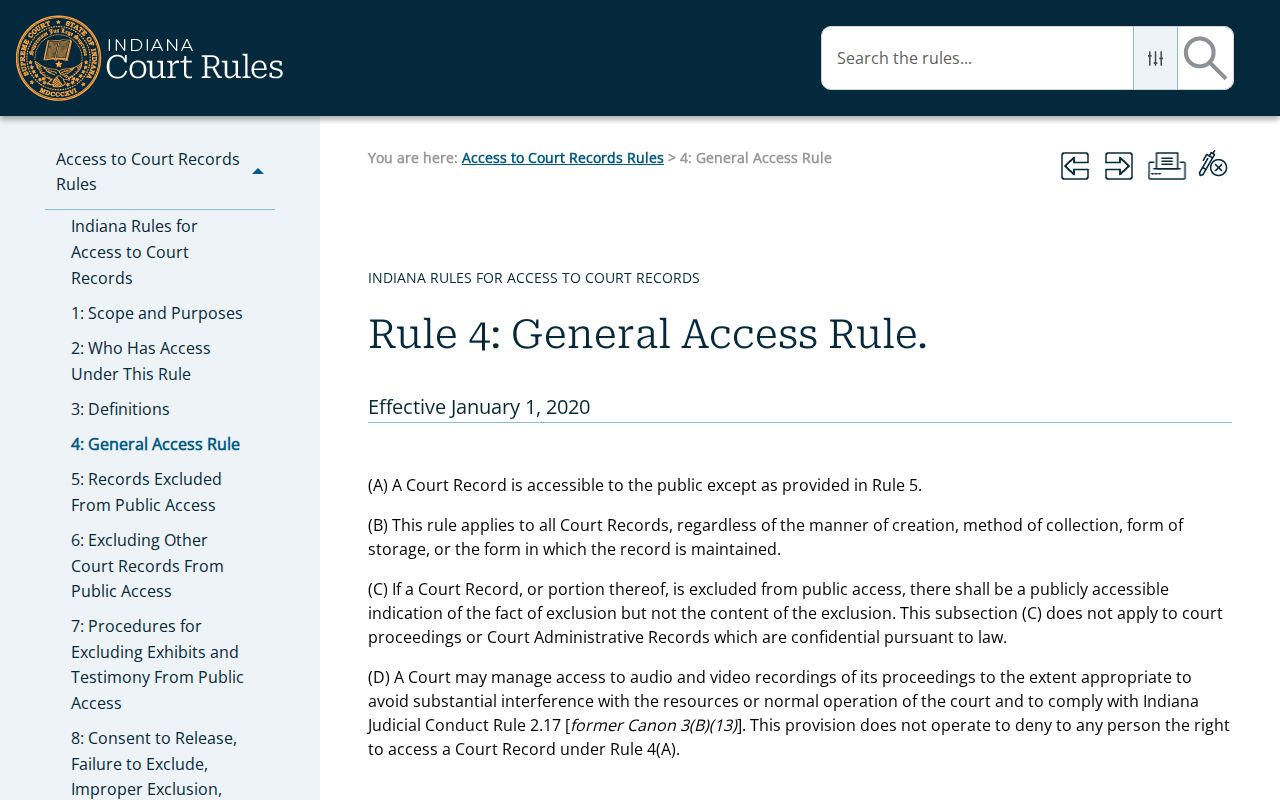
Public access to Floyd County warrant records is subject to Rule 5 exclusions. Not everything is open. Affidavits, juvenile records, identifiers, and sealed items stay closed. The Clerk handles official record requests, and where a record is excluded, Access Rule 9 lays out a verified motion, notice, hearing, and written-order route in defined circumstances.
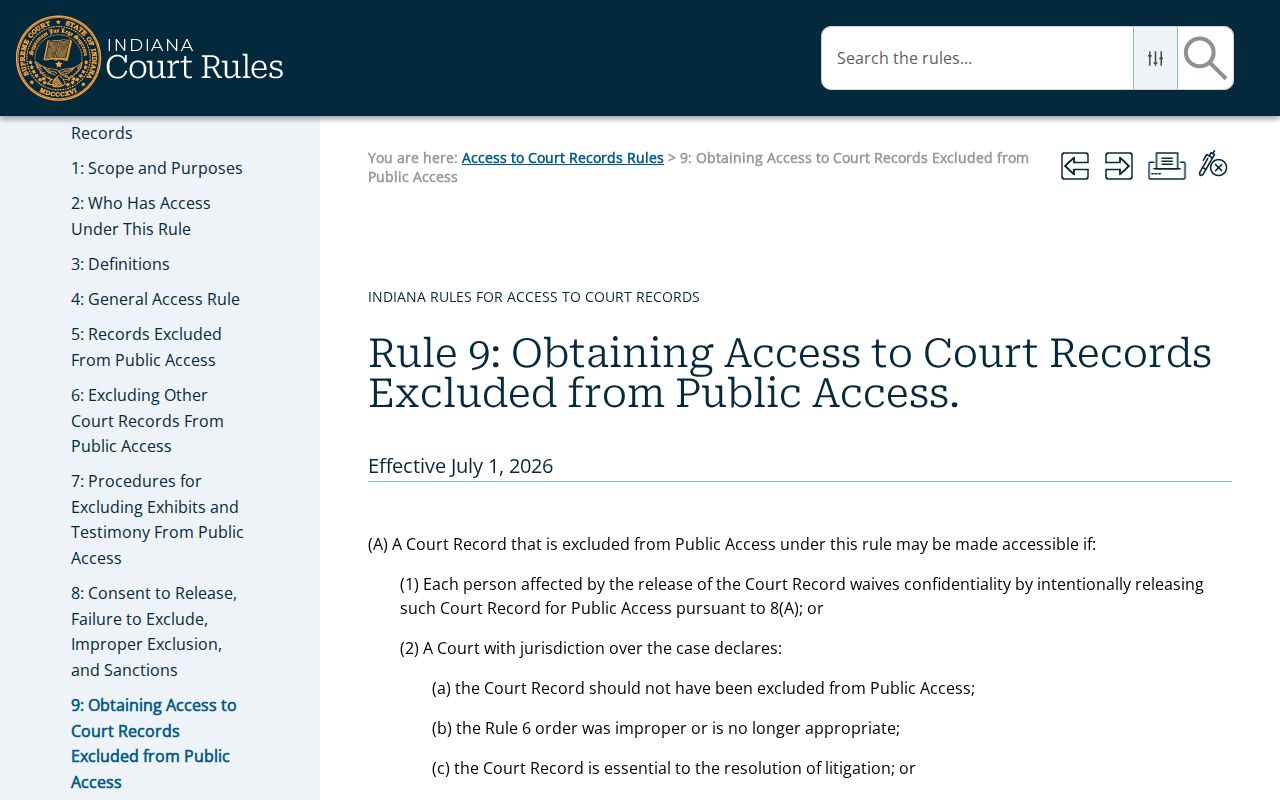
In Floyd County, that motion process is no shortcut around privacy rules, and it does not itself recall a bench warrant.
Floyd Probation Warrants Need Court Review
A probation-related bench warrant in Floyd County is not handled like an eligible traffic ticket. Superior Court 2 handles probation and Alcohol and Drug Services work. Court assignment depends on the case. Search the docket first. Then contact the issuing court or the probation channel named there. Ask what allegation, hearing, counsel, or bond step applies. Paying a different fine may leave the probation issue untouched. A Sheriff call cannot change a judge's order. Ask the court or public defender whether appointed counsel or legal aid applies. Floyd Superior Court 1 lists legal-help resources, but a referral does not guarantee representation.
Note: Keep the court code and complete cause number ready when calling about probation.
Floyd Return Rule Does Not Expire Warrants
Floyd County's Local Rule 211 sets return deadlines. Misdemeanor warrants return to the issuing court after six months and may be reissued at the prosecutor's request. Felony warrants return after one year. Bench warrants also return after one year and are reissued as needed, since "return" is just an administrative event and no promise that the case or court obligation vanishes.
Myth and fact: Waiting one year does not automatically clear a Floyd County bench warrant. The current issuing-court record controls.
A Floyd civil body-attachment form may carry a one-year expiration date. That date erases nothing. The underlying contempt or support duty still stands. Do not blend that deadline with the Floyd County criminal bench-warrant rule.
Clearing a Bench Warrant in Floyd County
Floyd County publishes no universal bench-warrant recall form. It depends on the case. The court may require a scheduled appearance, written motion, attorney-filed request, surrender followed by a hearing, bond, or another court-directed act. Ask the issuing court about the exact filing and service rules.
Act promptly and lawfully. Verify the order, seek legal advice where needed, and call before appearing at the courthouse or jail. Do not evade service or rely on unofficial lists.
Need a continuance in Floyd County? Get it in writing to the court before the hearing date. Send copies to every party. State the reason and list current contact information. That guidance comes from Superior Court 1, and it covers requests made ahead of time rather than a way to fix a missed appearance after the fact. Anyone who has already failed to appear in Floyd County must ask the court what procedure applies to an outstanding bench warrant from that point on.
Floyd County Courts Issue Bench Warrants
Floyd County runs one Circuit Court and three Superior Courts, numbered 1 through 3. Circuit Court carries the broad docket, plus exclusive probate, trust, and juvenile work for the county. Superior Court 1 takes felony criminal cases and more. Superior Court 2 is the traffic anchor and handles criminal and probation matters, while Superior Court 3 sits as a general trial court with a Veterans Court program. Odyssey case codes keep them straight: 22C01, 22D01, 22D02, and 22D03. A case wearing the old 22E01 prefix came from the abolished Floyd County Court, so the Clerk must sort it out. The code narrows a warrant lookup, though it will not tell you whether a bench warrant is still active. Floyd County's official listings show no separate municipal court for New Albany, Georgetown, or Greenville; city and town citations flow into the county structure, mostly Superior Court 2.
Floyd Bond Does Not Recall Warrants
Posting bond in Floyd County gets a person released from jail. It does not end the case. The warrant stays active until the court recalls it, and a later hearing can still follow. The Floyd County Sheriff lists three bond routes: court cash bond at 10 percent of total bond, full cash at 100 percent, and surety through an approved bonding company. A judge can change bond. Anything outside a set schedule requires judicial action. During Clerk business hours, bond is posted through the Clerk in Room 235. After hours, on weekends, and on holidays, the jail front lobby handles the listed routes. Bring valid government identification. Cash must be exact, since no change or coins are accepted. A $5 special death-benefit bond fee applies per criminal case. Call ahead. The payment locations are set, but walk-in surrender terms and same-day release are not guaranteed, and probation duties, fines, restitution, or BMV issues can remain even after release.